
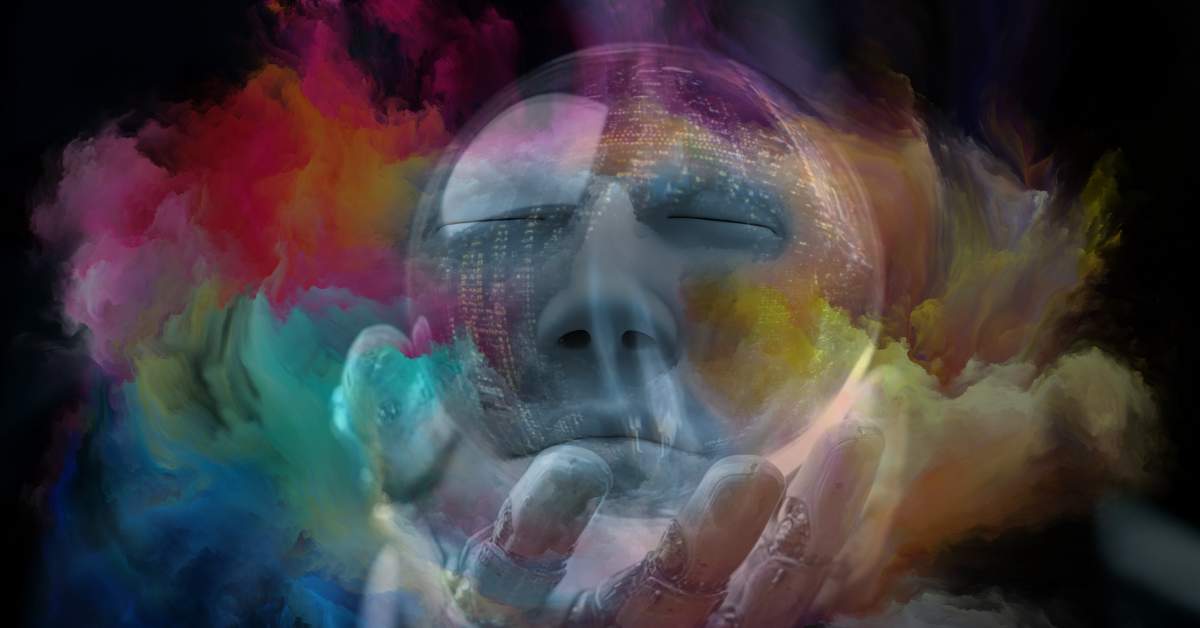
Arguably one of the worst repercussions of AI-generated content is the growing homogeneity in artistic and literary expression. Many AI systems rely on patterns and averages, scraping the web as they continue to learn. As a result, their output reflects dominant trends rather than producing anything unique.
AI art often looks stylistically similar and homogeneous across fresh new trends. It’s frequently uncanny and unsettling. Most of it is recognizable once one knows what to look for, garbling simple details, blurring and warping backgrounds, and failing at perspective.
AI-generated writing frequently sounds robotic, even when it’s doing its absolute best to mimic humans. It uses adjective stuffing to the point where it feels like you’re being forcefed a Merriam-Webster smoothie. Unsurprisingly, none of that has translated to more sales and higher profits.
We’ve reached the point where it isn’t just creatives who are fed up. AI-generated writing increasingly causes site visitors to bounce at the realization that the author couldn’t even be bothered to write something themself. Customers increasingly feel like AI disrespects their time and intelligence, lambasting its use in everything from customer service to advertising.
Worse still, when creative works become formulaic through algorithms, it’s marginalized voices suffer the most. Artists from underrepresented demographics, the very people who bring that distinct feeling of raw human emotion, are drowned out. Their experiences and aesthetics are lost amidst a glut of machine-made content that replicates and imitates the lowest common denominator at a rapid and endless rate.
Somewhat hilariously, this has actually started to backfire. AI models have begun poisoning their own datasets by feeding on AI generated content, a phenomenon known as model collapse. This results in an even narrower field of artistry, AI using AI content to make more AI content.
Instead of exploring the boundaries of literary and artistic potential, AI risks forcing us into a narrow view of what’s currently trending, even if it’s nothing but slop.
Psychological and Social Impact on Creators
Beyond the economic and ethical implications, the psychological toll on artists and writers is evident. We’re burning out, we’re losing hope, and we’re also seriously struggling with our financial futures. All of those factors are like little bugs eating away at our creative energy.
For centuries, society has challenged creative people to find meaning and identity through their work. How many of us were told as kids that “you’ll never be a famous artist, or make enough money off writing to survive as an adult? How many of us also said “Oh yeah? Watch me.”
Now, despite all that drive, passion, discipline and sacrifice, we’re losing everything we’ve built, to soulless budget cuts and gray-minded suits who think they understand creativity.
Watching that work replaced or devalued by an algorithm is profoundly demoralizing. We know it isn’t as good as us. We know it will never be able to truly mimic actual humans.
Even people who aren’t trained to recognize AI generated content can still feel something isn’t right.
Many artists are expressing feelings of anger, depression, and anxiety as they see their creative energy and passion poorly mimicked and mass-produced without recognition or remuneration. It really doesn’t feel great to be told by someone who understands neither your work nor the field of AI that you can be replaced by an LLM.
Among many creative communities there’s now a rising sense of futility. Even if we get enough clients to avoid financial ruin, what’s the point anymore? If AI can generate a novel, a painting, or a song with a beat in mere seconds, why strive to create something original? This existential crisis and dismal earning prospects is already discouraging new generations from pursuing any of the creative arts as a career.
Creativity thrives on passion and purpose, like a garden does with water and sunlight. But automation floods the field with salt. It kills everything and poisons the land just to make a few extra dollars.
Decline in Quality and Human Connection
While AI content can appear impressive on the surface, it often lacks substance and accuracy. Generated text can misinform, repeat clichés, or perpetuate biases present in its training data. AI generation can even suffer from poisoning its own data sets, as mentioned earlier. AI art can endlessly imitate techniques but it is incapable of innovating them. In the pursuit of perfection, profits and trends, all these algorithms are doing is producing bland uniformity instead of genuine creation.
Art and writing serve as vehicles for human connection. A painting moves us to emotion, because it reflects someone’s inner view of the world they live in. A story lingers in our minds because it reveals shared emotions or struggles we can identify with. When machines attempt to replicate this human spark, audiences lose that profound connection, and engagement drops significantly.
The consumption of culture and expression is hollowed out, becoming impersonal and transactional, rather than a joyful and connecting experience.
The Path Forward
Addressing the negatives of AI-generated content will require more than criticizing the technology and complaining about it online. Governments need to update copyright and IP protection laws to shield creators whose work is being stolen for AI model training. And industry leaders need to wake up both to what AI is and what it’s not.
They must take a firm stance. AI-generated content must be clearly labeled. All data sources must be transparent. Those who have their data stolen for training must be compensated.
Media platforms have the opportunity to do the right thing. They can stand up and play a key role in teaching audiences to value originality over convenience. They probably won’t, though.
Society needs to reassert and insist upon the fundamental worthiness and inherent value of human creativity. AI-generated content can simulate expression until the end of time, but only people carry that spark of innovation, empathy, and emotion. Only humans tell stories that push us forward as a species. The future of creative expression as a whole depends on preserving that truth and value.
We stand at a precipice, with the choice to walk away or jump into the abyss. I can only hope others will choose to walk away as I have. Reject AI generation before it’s too late and you can’t get brand trust back.
