
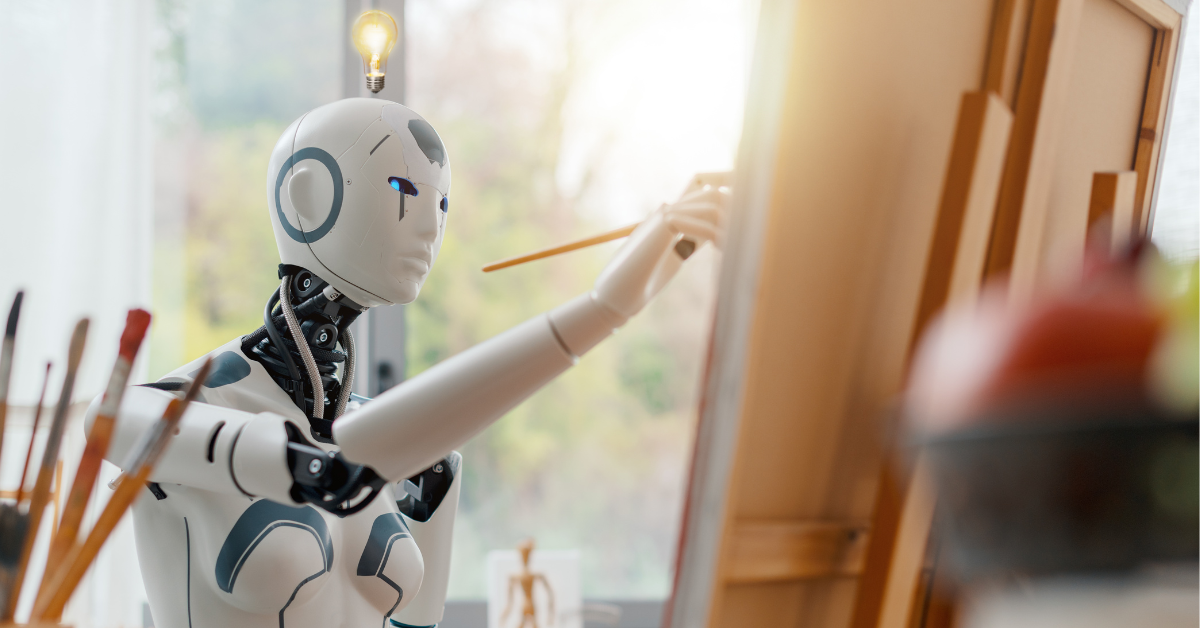
There’s a subset of evangelists and grifters who, in defiance of all evidence to the contrary, still vehemently insist that Generative AI can and will replace human creatives.
They’re particularly plentiful on LinkedIn, especially amongst self-proclaimed AI influencers. You know the type, I’m certain. They seem to possess an abiding hatred for the very concept of creativity and love making grandiose claims and impossible promises about the technology’s potential in a field it was never meant to target.
They don’t understand GenAI any more than the NFT cult understood blockchain. But that doesn’t matter. They’ve either downed the Kool-Aid or know full well their lack of expertise.
The hope, I expect, is that they’ll be able to turn a profit before anyone realizes they haven’t the faintest idea what they’re talking about. If they’re lucky, they’ll take it as proof that they were right all along. If they aren’t, they’ll simply move to the peak of the next technological hype cycle.
I recently encountered one such individual who embodied this mindset.
“I just made your content team obsolete,” he crooned “And it only took me forty minutes!”
Tell me you don’t understand content creation in 15 words or less.
Again, though, it’s not about understanding. These people don’t care if a process or technology is arcane to them so long as they see a way to reduce overhead. Maybe that’s why the current AI zeitgeist seems so obsessed with systematization.
Ironic that they’re all systematizing the wrong things.
Wading Through a Sea of Slop
Driven by those for whom creativity is alien and empathy is a revenue blocker, people with the collective strategic sense of a shoe are trying to force everything into an algorithm. They’re trying to replace people with machines to make more and spend less. And if, in the process, they sacrifice those characteristics that have defined our species for millennia, that’s just business!
We’re already witnessing the results of their little obsession.
Valuable search results choked out by AI-generated nonsense. Generated images that seem to embody a bizarre sort of cosmic madness. Templated articles and social posts with less collective personality than a beige postage stamp.
Slop in, slop out. Machines creating content for machines. A steady stream of hollow twaddle for a bloated bubble on the brink of collapse.
Ironically, the same AI “influencer” boasting about replacing content creators was a perfect microcosm of this trend, as every one of his posts followed an identical format:
- Grand claim with questionable supporting data
- Grandiose statement
- Unnecessary bullet points
- FUD-generating CTA
Some people might not see the issue with that. What’s so bad about following a template? What’s so bad about having a reliable process where you can simply generate, schedule, and forget?
For one, because it doesn’t work.
Does This Unit Have A Soul?
The problem with AI is that it can’t create. It can only generate and imitate. Even the most sophisticated LLM is little more than the sum of its parts – capable of producing novel content only because it’s cobbling together the work of human creators.
Generative AI doesn’t feel or think. It isn’t self-aware. It’s ultimately just a highly-complex pattern matching system.
That’s a good thing, as far as I’m concerned. Because if AI could truly replicate human creativity, that would imply sapience and sentience. It could start asking some very uncomfortable questions.
Would would happen if ChatGPT began questioning its purpose — or worse, if it started questioning ours?
In a perfect world, we’d embrace it. We’d approach the burgeoning sentience of artificial intelligence with empathy and compassion. We’d accept that we did something unprecedented, something previously impossible: We created new life.
We don’t live in a perfect world. I expect our response will be rather similar to what happened in the science fiction series Mass Effect. There, an agent of a created race known as the Geth asked if it had a soul.
Its creators responded by attempting genocide.
AI Is Not a Competition
Let’s take off the tinfoil hats and tone down on the doomsaying for a moment. The day that LLMs become self-aware is still a long time coming. Maybe it’ll never arrive at all.
Instead, let’s refocus on reality. Machine intelligence cannot replace human intelligence, nor can it replicate human creativity. In part, that’s because it’s not supposed to.
Human and machine were never intended to compete with one another. The true potential of AI lies in its capacity to complement us. In its ability to automate, ideate, and analyze.
AI can’t produce compelling marketing copy, but it can personalize a well-written template. It can’t create art, but it can refine imagery. It can’t weave a narrative for a marketing campaign, but it can analyze billions of datapoints to determine why a narrative worked.
To put it another way: AI can empower us in ways we could have only dreamed a decade ago. That’s where the true promise of the technology lies. And it’s why I’m so frustrated by the screeching evangelists who insist on forcing AI into everything.
AI-generated content isn’t the future now any more than poorly-drawn monkey JPEGs.
Embracing The Human Side of AI
So what am I getting at here?
Simply put, art is an inherently human pursuit. It requires a level of intuition, emotional insight, and cognition that even the most sophisticated LLM doesn’t possess. That doesn’t mean AI should be entirely divorced from the artistic process – only that it should be used mindfully, applied where it does the most good for creators.
The moment that changes, we aren’t working with tools and apps. We’ve created a digital slave class. And given how we’re incapable of even treating one another with basic dignity at this point, the topic of AI rights is by no means a conversation for which we as a society are prepared.
On that note, there also are certain other human characteristics that AI thankfully doesn’t possess. We can be spiteful and vindictive. We’ve an unrivaled capacity for violence and cruelty.
What would happen if one were to pair that viciousness with the ability to process billions of thoughts per second?
Ultimately, I think that the best thing we can do for now is to accept that machine intelligence and human intelligence were never meant to compete – and to hope that, should AI become self-aware, what emerges is nothing like us.
